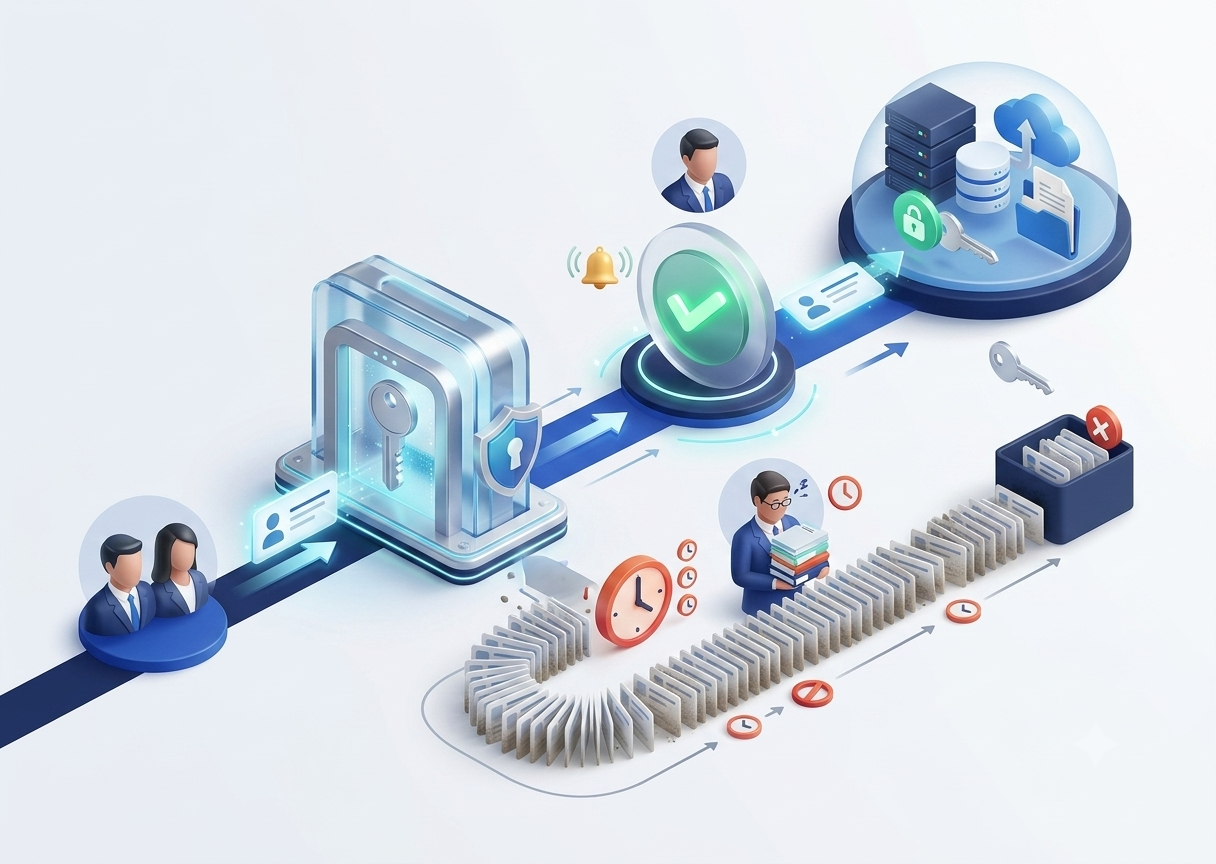
An employee needs access to a new application. Today, that often means logging a ticket, waiting for IT to triage it, waiting again for a manager to approve it over email, and finally — days later — getting access. Multiply that across a growing organization, and it's not just slow, it's a governance risk waiting to happen.
What Ticket-Based Access Really Costs:
- IT teams spend hours on repetitive, low-judgment approval routing instead of higher-value work.
- Delays push employees and managers toward workarounds — informal access grants that skip the process entirely.
- Every manual step is a step that can be undocumented, inconsistent, or forgotten.
What a Self-Service Model Changes:
- Employees request access through a catalog of pre-approved, policy-aligned options.
- Approvals route automatically to the right manager or data owner, with the request and justification captured every time.
- IT is freed from routine provisioning and can focus on exceptions, not everything.
Bottom Line:
Self-service access isn't about removing oversight — it's about moving that oversight into the workflow itself, so every request is fast, consistent, and fully auditable, without IT becoming the bottleneck.